How Safe Are Private Helicopter Flights in Bali for Tourists?
Private helicopter flights in Bali are exceptionally safe for tourists when booked with certified operators adhering to international aviation standards. Safety is ensured through a multi-layered approach:
- Rigorous Oversight: Operators are governed by Indonesia’s Directorate General of Civil Aviation (DGCA), which mandates strict maintenance and operational protocols.
- Experienced Aviators: Pilots hold commercial licenses and possess thousands of flight hours specifically within Bali’s unique topographical and meteorological conditions.
- Modern Aircraft: Fleets predominantly consist of reliable, modern helicopters like the Bell 429 and Airbus H130, known for their advanced safety features.
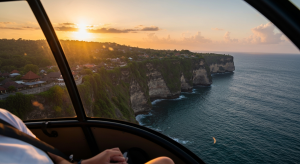
The percussive thrum of the rotor blades intensifies, a deep, resonant hum that you feel in your chest more than you hear. Outside the panoramic window, the manicured lawns of the helipad shrink with astonishing speed, replaced by a mix of emerald rice paddies and the distant, cobalt blue of the Indian Ocean. As the helicopter banks south, the iconic cliffs of Uluwatu emerge, their limestone faces glowing in the afternoon sun. This is the quintessence of luxury travel in Bali—an unparalleled perspective, a seamless transition from one corner of paradise to another. Yet, as the ground recedes, a critical question surfaces for the discerning traveler: Beyond the spectacle and the convenience, how can one be certain of the safety of this experience? The answer lies not in chance, but in a meticulous system of regulation, technology, and human expertise.
Demystifying Helicopter Safety: Global Standards and Bali’s Adherence
To properly assess the safety of private helicopter flights in Bali, we must first establish a global benchmark. Helicopter travel, when conducted by certified commercial operators, features a safety record that is statistically on par with general aviation. The framework for this safety is established by the International Civil Aviation Organization (ICAO), a specialized agency of the United Nations created in 1947 to manage the administration and governance of international air navigation. In Indonesia, the body responsible for implementing and enforcing these standards is the Directorate General of Civil Aviation (DGCA), or Direktorat Jenderal Perhubungan Udara. Every legitimate air charter service, from a single-engine prop plane to a twin-engine executive helicopter, must operate under a DGCA-issued Air Operator Certificate (AOC). This isn’t merely a piece of paper; it’s the culmination of a rigorous audit process that scrutinizes every facet of an operation—from maintenance logs and pilot training records to emergency procedures and insurance coverage. As an editor who has covered aviation for over a decade, I can attest that obtaining and maintaining an AOC is a testament to an operator’s commitment to safety. The process ensures that the company providing your Bali heli transfer isn’t just a service, but a fully-fledged, regulated aviation entity. This adherence to a global standard is the foundational pillar upon which passenger confidence is built.
The Anatomy of a Safe Operator: Aircraft, Pilots, and Protocols
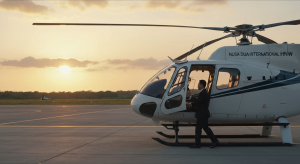
When you step into a helicopter in Bali, you are entrusting your safety to three key components: the machine, its pilot, and the maintenance culture that supports them both. Reputable operators on the island invest heavily in modern, reliable aircraft. You will commonly find fleets composed of industry-leading models such as the Airbus H130 (formerly Eurocopter EC130), prized for its spacious cabin and Fenestron shrouded tail rotor, which significantly enhances ground safety. Another workhorse is the Bell 429, a twin-engine helicopter that offers an extra layer of redundancy and a cruising speed of over 150 knots, capable of whisking you from Nusa Dua to the slopes of Mount Batur in under 30 minutes. The pilots at the controls are equally critical. A commercially licensed helicopter pilot in Indonesia will have, at a minimum, several hundred hours of flight time. However, the top-tier operators we partner with demand far more—often requiring a minimum of 2,000 to 5,000 flight hours, with extensive experience navigating Bali’s specific microclimates. I recently spoke with Captain I Made Sudarsana, a veteran aviator with over 9,000 hours, who emphasized, “Flying in Bali is not like flying anywhere else. You must understand the valley winds off the caldera and the sudden coastal squalls. This knowledge isn’t in a textbook; it’s earned.” This expertise is backed by a relentless maintenance schedule. Every aircraft undergoes daily pre-flight inspections, more detailed 100-hour inspections, and comprehensive annual overhauls conducted by DGCA-certified engineers. This is what you are investing in when you book a legitimate flight—a complex ecosystem of safety protocols.
Navigating Bali’s Unique Airspace: Volcanic and Meteorological Factors
Bali’s dramatic landscape is a core part of its allure, but it also presents unique operational challenges that demand superior piloting skill and technological support. The island is dominated by volcanoes, most notably the active Mount Agung, which stands at an impressive 3,031 meters (9,944 feet). While its presence provides a majestic backdrop for scenic flights, it also poses the risk of volcanic ash. Volcanic ash is highly abrasive and can melt in the heat of a jet engine, forming a glassy substance that can cause engine failure. To mitigate this, pilots rely on constant monitoring from the Darwin Volcanic Ash Advisory Centre (VAAC), which provides real-time data on ash cloud movement. During the 2017 Mount Agung eruptions, which closed Ngurah Rai International Airport for several days, helicopter operators demonstrated their rigorous safety protocols by grounding all flights until the airspace was declared clear by authorities. Beyond volcanic activity, Bali’s tropical climate creates dynamic weather patterns. A clear morning can give way to a sudden afternoon downpour. Professional helicopter services utilize sophisticated onboard weather radar and maintain constant communication with air traffic control and ground-based meteorological services. A flight plan is never absolute; it is a living document that a pilot will alter without hesitation, choosing to reroute, delay, or return to base at the first sign of deteriorating conditions. This conservative, safety-first approach is the hallmark of a professional operation and a key element in ensuring safe private helicopter flights in bali.
The Regulatory Framework: Indonesia’s DGCA and International Recognition
The assurance of safety for tourists comes not just from individual operators but from a robust, multi-layered national and international regulatory system. As mentioned, Indonesia’s DGCA is the primary authority, and their oversight is comprehensive. To operate commercially, a company must hold a valid Air Operator Certificate (AOC), specifically a CASR Part 135 certification for air taxi and charter operations. This certification is a clear indicator that the operator meets stringent requirements for personnel training, aircraft maintenance, and operational control. But the oversight doesn’t stop at the national level. The international aviation community also plays a role. The U.S. Federal Aviation Administration (FAA), for instance, runs the International Aviation Safety Assessment (IASA) program, which evaluates whether a country’s civil aviation authority adheres to ICAO safety standards. In August 2016, Indonesia successfully regained its FAA Category 1 rating, a significant milestone that signifies its commitment to world-class safety oversight. This rating allows Indonesian carriers to operate flights to the United States and is a powerful external validation of the country’s entire aviation ecosystem. This international vote of confidence extends to the helicopter sector, assuring travelers that the framework governing their flight from Seminyak to a remote wellness retreat in Tabanan is aligned with the same principles that govern major international airlines. When considering a flight, travelers should never hesitate to ask an operator for their AOC number—a transparent and professional company will provide it readily.
A Tale of Two Tiers: Identifying Red Flags and Avoiding the Grey Market
In any thriving tourism market, a “grey market” of unofficial or less-than-reputable operators can emerge, and Bali is no exception. While the vast majority of helicopter services are professional and safe, discerning travelers must know how to spot the red flags. The most significant warning sign is an unusually low price. The operational cost of a modern turbine helicopter is substantial; a single flight hour for a Bell 429 can easily exceed $2,500 USD when factoring in fuel, maintenance, insurance, and crew salaries. A price that seems too good to be true almost certainly involves cutting corners on one of these critical safety components. Other red flags include a lack of a professional website or physical office, evasiveness when asked about their AOC or insurance details, and a demand for cash-only payments without a formal charter agreement. A legitimate company will provide a detailed quote, a contract of carriage, and transparent information about their aircraft and safety record. The safest way to arrange a bali heli transfer is through a trusted source, such as a high-end hotel concierge, a reputable travel agency, or a dedicated platform like Bali Heli Transfer Discovery, which has already performed the necessary due diligence. We vet our partners exhaustively, verifying their certifications, inspecting their maintenance facilities, and assessing their operational history. This pre-screening process removes the guesswork for the traveler, ensuring that the chosen operator not only meets but exceeds the stringent safety standards set forth by the DGCA and expected by the international luxury travel community.
Quick FAQ on Helicopter Flight Safety in Bali
Navigating the specifics of helicopter safety can bring up several questions. Here are some concise answers to common queries I receive from travelers.
What happens if the weather suddenly changes mid-flight?
All pilots operating in Bali are highly experienced with the island’s microclimates. They use advanced onboard weather radar and are in constant communication with air traffic control. At the first sign of unsafe conditions, they are trained to divert to the nearest designated helipad or return to their point of origin. Safety, not schedule, is the absolute priority.
Can a helicopter land safely if its engine fails?
Yes. This is possible through a maneuver called “autorotation.” The upward flow of air through the main rotor keeps the blades spinning, allowing the pilot to glide the aircraft to a controlled landing. Pilots are required to practice this emergency procedure repeatedly during their training and recurrent checks to maintain proficiency. Furthermore, many operators in Bali utilize twin-engine helicopters, providing an additional layer of engine redundancy.
Are there strict weight and balance limits for passengers and luggage?
Absolutely. Weight and balance are critical to the stability and safety of any aircraft. Before every flight, the operator will discreetly weigh all passengers and luggage. This data is used to calculate the aircraft’s center of gravity to ensure it is within the safe limits specified by the manufacturer. A typical five-passenger helicopter like an Airbus H130 might have a total passenger and baggage payload of around 500 kg (1,100 lbs), which is strictly enforced.
What specific safety equipment is onboard for flights over water?
For any flight that transits over water, such as a transfer to Nusa Lembongan or the Gili Islands, DGCA regulations mandate that the helicopter be equipped with emergency flotation gear. This system can be deployed by the pilot to keep the aircraft afloat in the unlikely event of a water landing. Additionally, all passengers are provided with and briefed on the use of personal life vests before the flight departs.
Ultimately, the question of “how safe are private helicopter flights in Bali” is answered not with a simple yes or no, but with an assurance of process. Safety is a direct result of rigorous regulation, modern technology, operator diligence, and pilot expertise. The dramatic volcanic peaks and terraced valleys that make Bali a visual masterpiece demand an equally high standard of aviation practice. By choosing a certified, transparent, and well-vetted operator, you are not just buying a flight; you are investing in a culture of safety that makes these extraordinary perspectives possible. For those seeking to experience the Island of the Gods from this privileged vantage point, understanding the framework that guarantees your well-being is the first step. To explore a curated selection of the island’s most reputable operators and arrange your journey, a comprehensive guide to a private bali heli transfer provides the definitive starting point for a seamless and secure adventure.