How Much Does a Bali Helicopter Transfer Cost in 2024?
- Base charters for a 4-passenger Robinson R66 start near $2,500 for short routes.
- Longer transfers to remote areas like North Bali or Nusa Penida can exceed $4,500.
- Final costs are influenced by landing fees, pilot wait times, and after-hours surcharges.
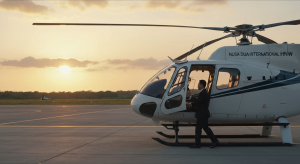
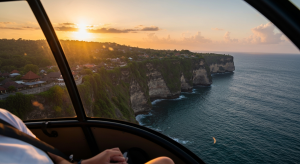
The humid Bali air whips across the tarmac, a stark contrast to the climate-controlled calm of the private terminal. Ahead, the rotor blades of an Airbus H130 begin their rhythmic thrum, a sound that signals the true start of your escape. Below, the notorious traffic of the Sunset Road is already a distant, irrelevant hum. As the helicopter ascends, the island’s intricate tapestry unfolds—a mosaic of emerald rice paddies, deep volcanic ravines, and the brilliant turquoise fringe of the Indian Ocean. This is not merely a transfer; it is an immediate immersion into the scale and majesty of the Island of the Gods, a perspective that ground transport can never offer.
Deconstructing the Base Charter Rate: What Your Investment Covers
When you receive a quote for a helicopter transfer in Bali, the primary figure, the base charter rate, encompasses more than just the flight itself. It’s a carefully calculated sum reflecting the immense operational costs and precision logistics required for private aviation. For most transfers, the aircraft of choice is the Robinson R66, a reliable and efficient machine with capacity for four passengers and minimal luggage. In 2024, securing an R66 for a one-hour private charter typically starts at around $2,500 USD. This price covers the highly trained pilot’s time, fuel, comprehensive insurance, and the flight duration itself. Operators like ourselves price their services based on flight hours, a standard industry practice.
For those requiring more space or a quieter, more luxurious cabin, the upgrade to an Airbus H125 or H130 is a popular choice. These larger turbine-engine helicopters can accommodate five to six passengers and offer superior performance and comfort, but this comes at a premium. Expect the hourly rate for an Airbus model to be 40-50% higher, often beginning in the $3,500 to $4,000 range. Understanding the logistics of a bali heli transfer is the first step to appreciating its value. The cost reflects not just the machine, but the entire infrastructure of safety, maintenance, and regulatory compliance that makes such a seamless experience possible. Every flight is preceded by meticulous pre-flight checks and flight plan filings, a behind-the-scenes effort that is factored into the final price you pay.
The Geography of Price: How Destination Dictates Your Invoice
The single greatest variable in the cost of your Bali helicopter transfer is the flight path. The island’s diverse topography, from the southern limestone cliffs to the central volcanic peaks, creates a varied landscape for aviation. A short hop, for instance, from Ngurah Rai International Airport (DPS) to a cliff-top resort in Uluwatu, is a journey of approximately 15-20 minutes. This direct, efficient route minimizes flight time and typically falls at the lower end of the price spectrum, around $2,500 to $3,000. It transforms a potentially hour-long, traffic-clogged drive into a brief, scenic prelude to your stay.
As you move further afield, the costs scale accordingly. A transfer to the cultural heart of Ubud, or a secluded villa in the Tabanan regency, requires navigating more complex airspace and terrain. This 25 to 30-minute flight will often be priced between $3,500 and $4,200. The alternative by road, especially during peak season, can easily stretch to two hours. For the ultimate in remote luxury, transfers to the neighboring islands of Nusa Lembongan, Nusa Penida, or even the Gili Islands (technically part of Lombok) represent the upper echelon of cost. These journeys can take 45 to 60 minutes of flight time, crossing open water and requiring more extensive flight planning. Consequently, a transfer to a private helipad on Gili Trawangan, roughly 115 kilometers from DPS, can push the invoice toward $6,000 or more. The island’s geography, detailed on its Wikipedia page, is a key determinant of both the beauty and the cost of the flight.
Beyond the Flight Path: Understanding Ancillary Fees and Surcharges
An experienced traveler knows that the sticker price is rarely the final price. In the world of private helicopter charters, this holds true. While the base rate covers the flight, a series of ancillary fees can materially affect the final invoice. The most common of these are landing fees. While our home base helipad is included, landing at a private helipad owned by a resort is not. Premier properties like Amankila, Four Seasons Sayan, or The Ritz-Carlton, Mandapa, maintain their own facilities and charge a landing fee that can range from $250 to over $500. This fee covers their ground staff, security, and maintenance of the pad. It’s a critical detail to clarify during the booking process.
Time is another crucial factor. If your itinerary requires the pilot and helicopter to wait—for instance, while you have a two-hour lunch meeting before your onward journey—you will be billed for “wait time.” This fee, typically between $300 and $500 per hour, compensates the operator for having an aircraft and pilot on standby and unable to perform other flights. Furthermore, flight operations in Bali are generally restricted to daylight hours, from sunrise to sunset (approximately 6:30 PM). Any request for flights outside this window, if permissible at all, will incur a significant after-hours surcharge, sometimes as much as 50% of the charter cost, due to the increased risk and regulatory requirements. These are the nuanced details often covered in our definitive guide to helicopter travel in Bali, ensuring complete transparency for our clients.
The “Experience” Premium: Charters vs. Simple Transfers
Distinguishing between a point-to-point transfer and a scenic tour is essential, as it fundamentally changes the cost structure. A transfer is a utility, designed to move you from A to B with maximum efficiency. A scenic charter, however, is an experience in itself—an aerial excursion designed for discovery. Many of our clients choose to combine the two. For example, on a transfer from the airport to a resort in the north, one might request a 30-minute detour to circle the caldera of Mount Batur. This additional flight time is billed at the standard hourly rate, effectively adding around $1,500 to $2,000 to the total cost, but transforming the journey into a memorable adventure.
“A transfer gets you there. A tour makes you understand why you came,” Captain Adhi, a veteran pilot with over 8,000 flight hours in the region, shared with us. “From the air, you see the patterns of the Subak irrigation systems, the way the villages connect, the sheer scale of the volcanoes. It provides context to the entire island.” These bespoke tours can be tailored to specific interests. Popular requests include flying over the iconic sea temple of Tanah Lot, tracing the dramatic coastline of the Bukit Peninsula, or witnessing the incredible terraced rice paddies of Jatiluwih, a landscape so unique it’s been recognized as a UNESCO World Heritage site. This “experience premium” elevates the helicopter from a mere convenience to a central highlight of a luxury Bali itinerary.
The Value Proposition: Is a Helicopter Transfer Worth the Investment?
The question of value is subjective, but for many discerning travelers, the benefits of a helicopter transfer far outweigh the cost. The most tangible return on investment is time. During Bali’s peak seasons in July, August, and late December, road travel can be excruciatingly slow. A journey from Seminyak to Ubud that should take 90 minutes can swell to over three hours. A helicopter makes that same trip in 20 minutes. For a traveler on a limited schedule, saving four to five hours of transit time over a weekend is invaluable. This reclaimed time can be spent by the pool, exploring a temple, or enjoying a spa treatment rather than staring at the back of a tour bus.
Beyond time, a helicopter provides unparalleled access and privacy. It allows you to reach remote, exclusive properties in areas like Sidemen or West Bali that are otherwise a logistical challenge. You bypass all public touchpoints—no airport crowds, no roadside traffic, just a seamless transition from the runway to your private villa. According to Indonesia’s official tourism portal, improving infrastructure is a priority, but for now, air travel remains the supreme solution for efficient movement. The decision to book a charter often comes down to prioritizing time and experience, a core tenet of luxury Bali helicopter travel. When you calculate the cost per person for a group of four, and weigh it against the time saved and the unique perspective gained, the value proposition becomes remarkably clear for those who prize efficiency and exclusivity above all else.
Quick FAQ: Your Bali Helicopter Cost Questions Answered
Does luggage weight and size affect the price?
Absolutely. Weight is a critical safety parameter in aviation. A Robinson R66, for example, has a strict luggage limit of about 20 kg per person, and bags must be soft-sided and compact. If your group has excess or bulky luggage (like golf clubs or surfboards), it may require a separate ground transfer for the bags or even a second helicopter flight, both of which would add significant cost to your booking.
Can I book a one-way transfer, and is it half the price of a round trip?
One-way transfers are very common. However, they are not priced at 50% of a round-trip journey. The operator must still fly the helicopter back to its home base—an “empty leg” flight. Therefore, a one-way transfer is typically priced at 60-70% of the round-trip cost to account for the operational expenses of the return flight.
Is it cheaper to book directly with a charter company or through my hotel concierge?
Booking directly with a reputable, licensed operator like Bali Heli Transfer Discovery generally provides the most transparent and competitive pricing. While booking through a high-end hotel concierge offers convenience, they often add a service fee or commission, which can increase the final price by 10-15%. We recommend direct booking for clarity on all potential fees.
Are the quoted prices negotiable?
For standard point-to-point transfers, prices are typically fixed based on flight time and operational costs. For more complex, multi-day charters or large block bookings, there may be some room for negotiation with the operator. However, the core costs related to fuel, maintenance, and pilot fees are non-negotiable to ensure safety and service standards are never compromised.
Ultimately, the cost of a helicopter transfer in Bali is a direct reflection of the value it provides: unparalleled speed, exclusive access, and a perspective that fundamentally changes how you experience the island. It is an investment in the most precious commodity of all—time. When you are ready to elevate your Bali journey from the ordinary to the extraordinary, our team is here to design a seamless aerial experience for you. For a precise, tailored quote that matches your itinerary, explore the possibilities with a bali heli transfer and let us handle every detail from takeoff to touchdown.