Bali Helicopter vs. Private Car Transfer: Which Is Better for You?
- Speed: A 90-minute car ride from the airport to Ubud becomes a 15-minute flight.
- Experience: Helicopters provide a panoramic tour; cars offer intimate village views.
- Cost: Private cars are a fraction of the cost of a private helicopter charter.
The air in the arrivals hall at I Gusti Ngurah Rai International is thick with the promise of Bali—a humid, fragrant blend of clove cigarettes, frangipani, and jet fuel. You have arrived. Your luggage, thankfully, appears on the carousel. Now, the first true decision of your journey presents itself: how to bridge the distance between this bustling terminal and the tranquil sanctuary of your villa. Down one path lies the familiar comfort of a waiting luxury sedan, its air-conditioning a welcome reprieve. Down the other, the distinct, thrilling possibility of ascending above it all. The choice between a private car and a helicopter is more than a logistical one; it’s a decision that will fundamentally shape the first hours of your experience on the Island of the Gods.
The Tyranny of Time: A Quantitative Look at Bali’s Traffic
For the seasoned luxury traveler, time is the ultimate currency. In Bali, this commodity is often spent in traffic. The island’s road infrastructure, a charming network of narrow lanes designed for a bygone era, struggles to accommodate the more than 1.5 million vehicles registered, a figure that grows by nearly 10% annually. A journey that appears short on a map can be deceptively long. Consider the classic transfer from Ngurah Rai Airport (DPS) to the cultural heart of Ubud. The distance is a mere 37 kilometers, yet the drive routinely takes between 90 minutes and two and a half hours, depending on the time of day and ceremonial road closures, which are a frequent and unpredictable part of Balinese life. A similar fate awaits those heading to the cliffside villas of Uluwatu; a 22-kilometer trip can easily consume over an hour. This is the reality of ground travel in paradise. As I discussed with Made Wijaya, a transport logistics expert in Denpasar, “The challenge is not the distance, but the density. We have a confluence of tourist traffic, local commerce, and cultural processions all sharing the same limited space.” This congestion isn’t just an inconvenience; it erodes precious vacation time. Every minute spent stationary on Jalan Raya Ubud is a minute not spent by your private infinity pool. For a traveler on a tight seven-day itinerary, losing four to five hours in transfers can mean sacrificing an entire afternoon of exploration or relaxation.
The Aerial Perspective: What a Helicopter Transfer Truly Delivers
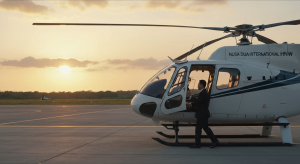
A bali heli transfer fundamentally redefines the concept of arrival. It transforms a mundane transfer into an memorable introductory tour. As the helicopter ascends from the helipad near the airport, the chaotic mix of southern Bali’s traffic recedes into a surprisingly organized pattern. Within minutes, you are cruising at an altitude of 1,500 feet, the island unfolding beneath you. The view is a revelation. You see the intricate, ancient geometry of the rice paddies, part of a cultural landscape recognized as a UNESCO World Heritage site for its Subak irrigation system. You trace the dramatic coastline, where the turquoise waters of the Indian Ocean crash against the limestone cliffs of the Bukit Peninsula. On a clear day, the volcanic peaks of Mount Agung and Mount Batur dominate the northern horizon. Captain Adhi, a veteran pilot with over 6,000 flight hours across the Indonesian archipelago, explained it to me on a recent flight. “From the ground, you see Bali in pieces. From the air, you understand it as a single, living organism.” The journey from DPS to a resort with a helipad like the Viceroy Bali in Ubud takes approximately 18 minutes. This is not just a time-saving of over an hour; it is an 18-minute experience that adds immeasurable value to a trip. The Robinson R66 or Airbus H130 helicopters typically used for these charters offer panoramic windows, ensuring every passenger has an unobstructed view. It is the ultimate transition from the rigors of long-haul travel to the serenity of your destination.
Ground-Level Immersion: The Case for the Private Car
To dismiss the private car transfer is to overlook an entirely different, yet equally valid, travel philosophy. For some, the journey is not an obstacle to be overcome but an experience to be savored. A chauffeured ride in a climate-controlled Toyota Alphard offers a gradual immersion into Balinese culture that an aerial transfer bypasses. As you move from the urban sprawl of Denpasar towards the rural landscapes, the scenery shifts frame by frame. You witness the daily rhythms of life: children in school uniforms walking home, artisans carving intricate wooden panels in roadside workshops, and women placing delicate *canang sari* offerings at village temples. This ground-level perspective is rich with detail. The flexibility of a private car is another significant advantage. A helicopter operates on a strict point-to-point flight plan. A car, however, allows for spontaneity. You can instruct your driver to stop at a bustling local market in Sukawati to browse for textiles, pull over at a roadside stall for a taste of fresh *salak* (snake fruit), or make a detour to a lesser-known temple that catches your eye. Moreover, the cost differential is substantial. A one-way private car from the airport to Ubud typically costs between IDR 400,000 and IDR 700,000 (approximately $25 to $45 USD). A helicopter charter for the same route starts around $1,800 USD. For travelers who value cultural connection and financial prudence, the private car remains the superior and more practical choice.
Logistics and Practicalities: Luggage, Weather, and Accessibility
The decision between air and ground transport involves more than just preference; it is governed by hard logistics. Helicopter travel comes with stringent limitations, primarily concerning luggage. A typical charter on a Robinson R66 allows for approximately 15-20 kilograms of luggage per passenger, and bags must be soft-sided and compact to fit in the small cargo hold. For travelers with multiple large suitcases or specialty equipment like surfboards or golf clubs, this is a non-starter. Many clients who opt for a helicopter transfer arrange for a separate vehicle to transport their main luggage, adding another layer of coordination and cost. Weather is the second major variable. Bali’s tropical climate, especially during the wet season from November to March, can produce sudden, intense rainstorms and low cloud cover that can ground flights. While safety protocols are paramount, it means that a flight can be delayed or canceled with little notice, requiring a last-minute switch to a car. Conversely, private cars are all-weather workhorses with near-limitless accessibility. They can navigate to virtually any villa, no matter how remote, as long as there is a road. This door-to-door service is a key advantage over helicopters, which are restricted to a network of helipads at major resorts and designated landing zones. Understanding these practical constraints is essential, and our Bali Heli Transfer: The Definitive Guide to Helicopter Travel in Bali offers a deeper dive into these operational details.
The Verdict: A Decision Matrix for the Discerning Traveler
So, how does one choose? The optimal decision lies at the intersection of your itinerary, budget, and travel style. We can distill the choice into a clear framework.
You should choose a bali heli transfer if:
- Time is paramount. You are on a short trip, connecting to a liveaboard yacht, or simply cannot abide the thought of sitting in traffic. You value every reclaimed minute.
- The experience is a priority. You view the transfer not as a means to an end, but as an integral, memorable part of your vacation. The aerial perspective is a key attraction for you.
- Your destination is remote or traffic-prone. You are traveling from the south to the far north, like Menjangan, or to a perennially congested area like Ubud or Canggu, where the time savings are most dramatic.
- You travel light. You have minimal luggage or have arranged for separate baggage transport.
You should choose a private car transfer if:
- Budget is a consideration. You prefer to allocate the significant cost difference towards other experiences, such as fine dining, spa treatments, or extended activities.
- You seek cultural immersion. The slow, unfolding journey through villages and countryside is an appealing prospect. You want to see, smell, and feel Bali from the ground up.
- Flexibility is key. You want the freedom to make unplanned stops for photos, shopping, or a quick meal.
- You have significant luggage. You are traveling with family, multiple large suitcases, or bulky sports equipment.
As Indonesia.Travel, the official tourism portal, often highlights, Bali’s allure is its diversity. The same principle applies to its transport. The modern infrastructure of aviation and the traditional network of roads offer two different but equally compelling ways to explore the island, as detailed in Bali’s comprehensive overview.
Quick FAQ: Your Bali Transfer Questions Answered
How much time do I realistically save with a helicopter?
For a 40-kilometer journey like DPS to Ubud, the time saved is typically 75 to 120 minutes. For a cross-island transfer from south Bali to a remote resort like Plataran Menjangan, a 4-hour drive becomes a 45-minute flight, saving you over three hours each way.
Are helicopter transfers in Bali safe?
Absolutely. Reputable operators adhere to rigorous international safety standards (EASA/FAA). Aircraft are meticulously maintained, and pilots are highly experienced, often with both military and commercial flight backgrounds. All operations are governed by Indonesia’s Directorate General of Civil Aviation. For a deeper look at safety protocols, our guide to helicopter travel in Bali provides extensive information.
Can I book a helicopter on arrival at the airport?
This is not recommended. Helicopter charters require advance booking, ideally at least 48 hours prior. This allows the operator to file a flight plan, secure landing permits, and schedule the aircraft and pilot. Spontaneous bookings are almost never possible.
Is a hybrid approach a good idea?
It is an excellent and increasingly popular strategy. Many of our clients use a helicopter for the primary, long-distance transfer from the airport to their hotel to maximize their first day. They then rely on private cars for local excursions and their eventual departure, balancing speed and experience with practicality and cost.
Ultimately, the choice between the visceral thrill of a helicopter and the immersive journey of a private car is a personal one. It reflects what you value most in your travels: the efficiency of time or the richness of the journey. One offers a god’s-eye view, a grand, sweeping introduction to the island’s majesty. The other offers a human-scale narrative, a story that unfolds one village at a time. To explore bespoke aerial routes, view our fleet, and design an arrival that perfectly complements your itinerary, discover the complete range of our bali heli transfer services and let us craft your perfect beginning.